Urban Future Ljubljana 2026: Why ‘Troublemakers’ Are the Heartbeat of Better Cities
Urban Future 2026 - held across 3.5 extraordinary days in the Slovenian capital - was billed as Europe's ‘Better Cities Event’, and it earns that title. Around 2,000 urban changemakers or ‘urban unicorns’ from 290 cities and 48 countries packed into Gospodarsko Razstavišče for 60 sessions, 180 speakers, and an agenda covering everything from climate communications to the Cities Fuckup Show. It was a gathering of urbanists, creatives, policymakers, technologists, and storytellers all circling the same essential question:
How do we build cities people actually want to live in?
“Our cities need troublemakers”, Urban Future CEO Gerald Babel-Sutter stated emphatically in his opening address. ‘ He urged the audience to go away with three takeaways:
Don't let others tell you what you cannot do
Play ignorant and ask why
Get together with other unicorns and find a way
As a place storytelling strategist, I went looking for fresh thinking on placemaking, place branding, and what it really means to tell the truth about a city. I found that and considerably more.
I went to Urban Future 2026 in Ljubljana as a delegate. I came back as a converted ‘urban unicorn’.
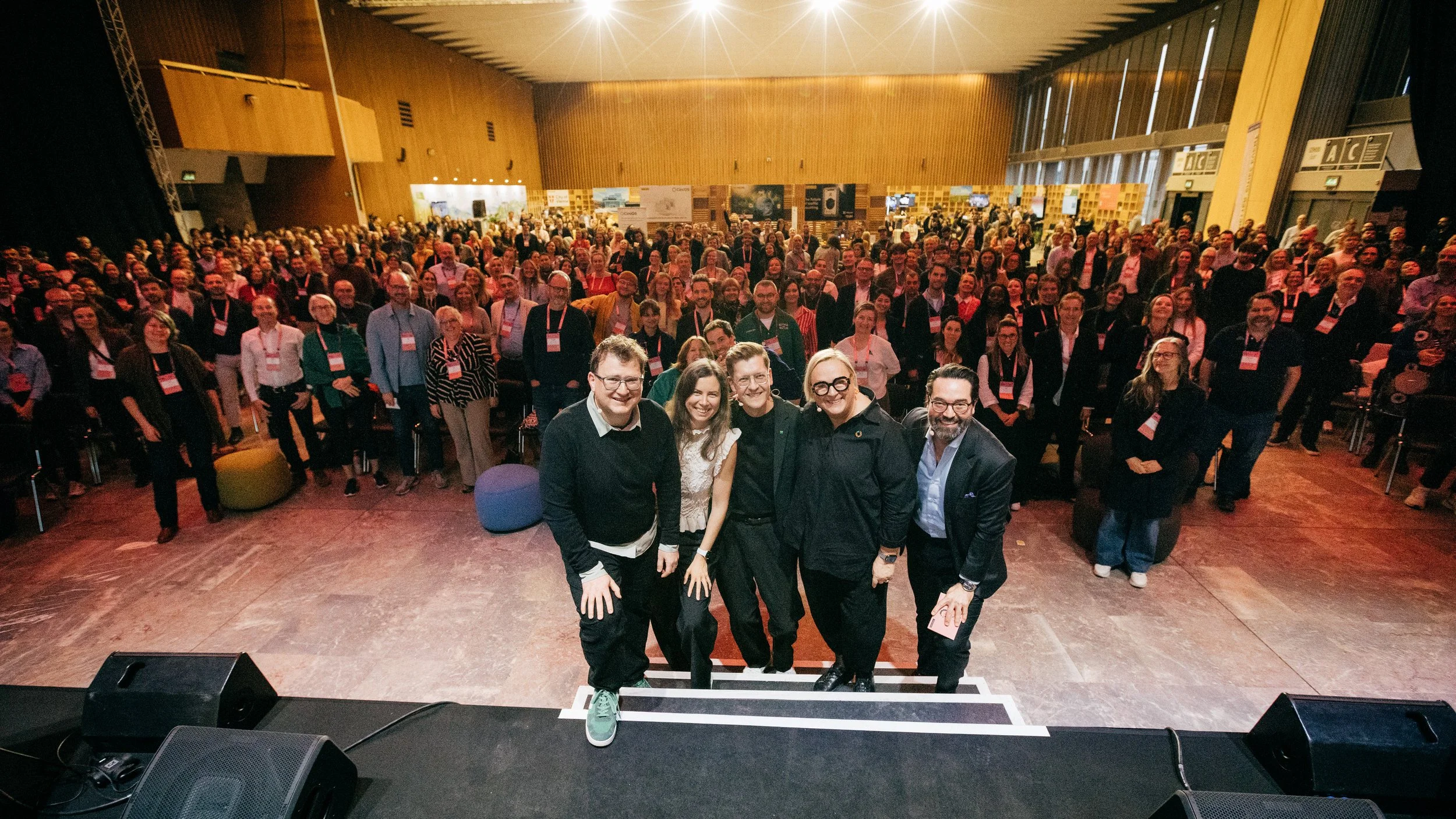
The Cities Fuck Up Show ©Adam Slowikowski
Here are the six ideas I brought home.
1. A city is not just infrastructure. It's an invitation to live well.
David Sim's session on the Soft City set the intellectual temperature for everything that followed. His argument is deceptively simple: the way we build cities either invites people in or pushes them out. Soft edges: small shops at street level, seating that doesn't feel hostile, buildings at a human scale, create the conditions for connection.
Hard cities optimise for efficiency. Soft cities optimise for life.
That "holiday feeling", the ease, the warmth, the sense that a city is on your side, is not an accident. It is a design decision. And it is a storytelling decision.
For those of us working in place marketing and place branding, the implication is clear: we are not selling buildings or investment opportunities or footfall statistics. We are transmitting a feeling. And if the place we're describing hasn't been designed to generate that feeling, no amount of brilliant copywriting will bridge the gap.
2. Human scale is the most underused tool in place storytelling
One of the most immediately actionable ideas from the conference came embedded in a practical observation: when cities give people directions in minutes rather than metres, behaviour changes. The walk that felt impossible at "500 metres" becomes easy at "6 minutes." The park that felt remote becomes part of daily life.
This is not a small thing. It's a reframe of what proximity means, and it applies directly to place marketing. When we describe a neighbourhood, a destination, or a district, we habitually reach for data: hectares, investment figures, connectivity indices. But the story that moves someone is told on a human scale.
How long does it take to walk to the market?
Can children get to school without a car?
What does the neighbourhood sound like at 8 am on a Tuesday?
These are the details that build emotional attachment to a place. And emotional attachment is the foundation of every successful place brand.
3. Facts don't change behaviour. Narratives do.
This was the drumbeat beneath the entire conference, and it came from every direction at once: climate communications, urban mobility, behaviour change, gender equity. Josephine Liu's line, "When your policy/message contradicts the streets, the streets always win", sums it up. You can put up signs. You can publish the data. You can commission the report. But until you've found the story that meets people where they already are, you're speaking into a void.
Astrid Arnslett from CICERO reinforced this in the climate communications track: find out what people care about, then build the narrative bridge. Don't start with the problem. Start with the person. Mine the data. Make people care about climate change on a Tuesday, not just the weekend. This is a placemaking strategy and place marketing strategy in one elegant principle, and it's one that the best place brands already instinctively apply.
4. Polycentric Cities = Polyphonic Stories
Madrid's vision for a 45-minute city, not one dominant centre radiating outwards, but a network of connected, independent, distinct neighbourhoods, each with its own identity and economy, is one of the most exciting frameworks in contemporary urban planning. Multiple hearts. One city.
For place storytellers, this is both a challenge and an opportunity. How do you build a coherent place brand for a city that refuses to have a single story? The answer lies in finding the common thread, the values, the spirit, the way of life that runs through all those distinct centres, and letting each neighbourhood express it in its own voice. Polycentricity isn't a branding challenge. It's a branding adventure.
5. The most powerful stories include the failures.
The Cities Fuckup Show at the end of Day 2 deserves its own essay. Watching genuinely accomplished practitioners like Honorata Grzesikowska, Anton Nikitin, and Krista Kampu stand up, one after another, and talk honestly about what went wrong — with warmth rather than shame, with generosity rather than defensiveness — was one of the most energising experiences of the whole conference because everyone in the room recognised themselves in those stories.
The takeaway for place storytelling is uncomfortable but important: the sanitised success story rarely lands. People can feel the edit. The place narratives that create genuine connection, that make people want to be part of something, are the ones honest enough to show the journey, including the detours. As the host Dejan Stojanovic, put it: Let’s give each other the gift of failure. If you're not failing, you're not growing.
6. If your place story doesn't include everyone, it isn't a place story.
Nourhan Bassam, author of ‘The Gendered City, made the startling point that women are the only majority group that is treated like a ‘minority’. Cities are not gender neutral. They carry the biases of whoever designed them, showing up in everything from street lighting to public transport routes. This applies with equal force to the stories we tell about cities. A place brand that speaks to one demographic, one income bracket, one way of moving through the world, is not representing the place. It is curating a version of it. And that gap, between the story and the lived reality, is where trust in place branding erodes.
Authentic placemaking and authentic place marketing begin in the same place: on the ground, talking to real people, listening to what the place actually feels like to inhabit, not to everyone who might want to visit, but to everyone who already lives there.
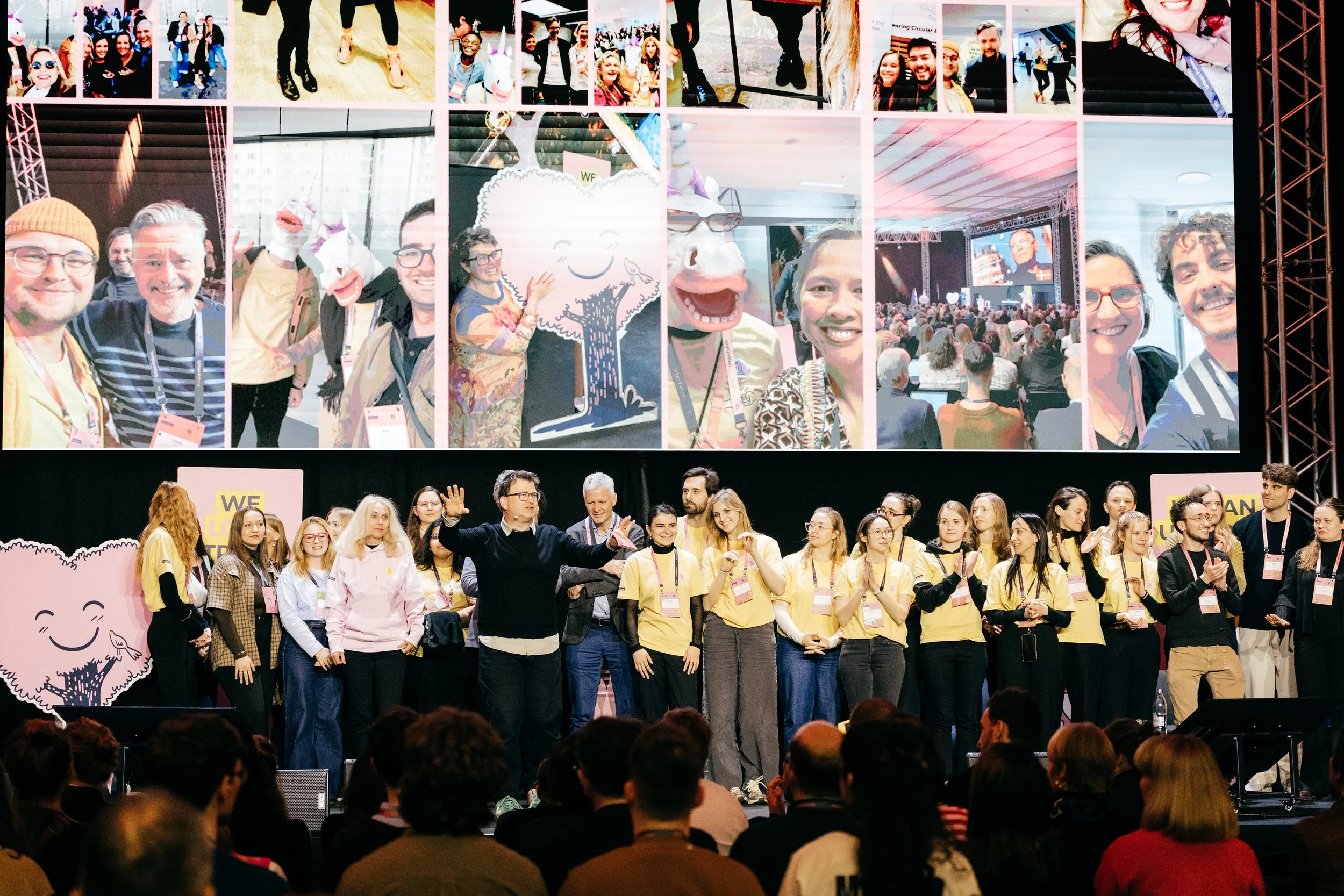
The Urban Future team and it’s band of partners and volunteers. ©Dagmara Hendzlik
What does this mean for placemaking, place branding, and place marketing?
We keep talking about cities like they’re just infrastructure projects.
They’re not.
They are emotional systems. They are vessels of our collective memories.
And yet…we keep designing them like spreadsheets.
We don’t have a knowledge problem. We have an implementation problem.
We already know:
People shape places more than plans do
Emotion drives behaviour more than information
Experience matters more than intention
But our processes haven’t caught up.
Placemaking needs to move from design-led to behaviour-led
Start with how people actually use space, not how we want them to.
Place Branding needs to move from storytelling to truth-telling
Not just aspirational narratives, but real, lived experience.
Place Marketing needs to move from promotion to relevance.
Not just “why this place is great”. But “why does this place fit into your life?”
Enormous thank you to the entire Urban Future team for building a conference that feels, genuinely, like a community. And to our wonderful hosts in Ljubljana for hosting such an inspiring gathering of urban thinkers, doers, and changemakers. You’ve certainly inspired new conversations for The Talking Place podcast.
Here’s to more emotional connections, soft edges, and city stories that make us live well.
Looking forward to #UF27 in Istanbul already!
Work with us to tell your place story
At Concept Culture, we work at the intersection of placemaking, storytelling, place branding and place marketing. UF26 felt like a live case study of why those disciplines can no longer sit at the edges of urban development. They are no longer “nice to have”. They are vital pieces of the urban experience.
If you're working in place, culture, cities, or the stories that connect them — I'd love you to connect with me on LinkedIn. This is the conversation I intend to keep having.
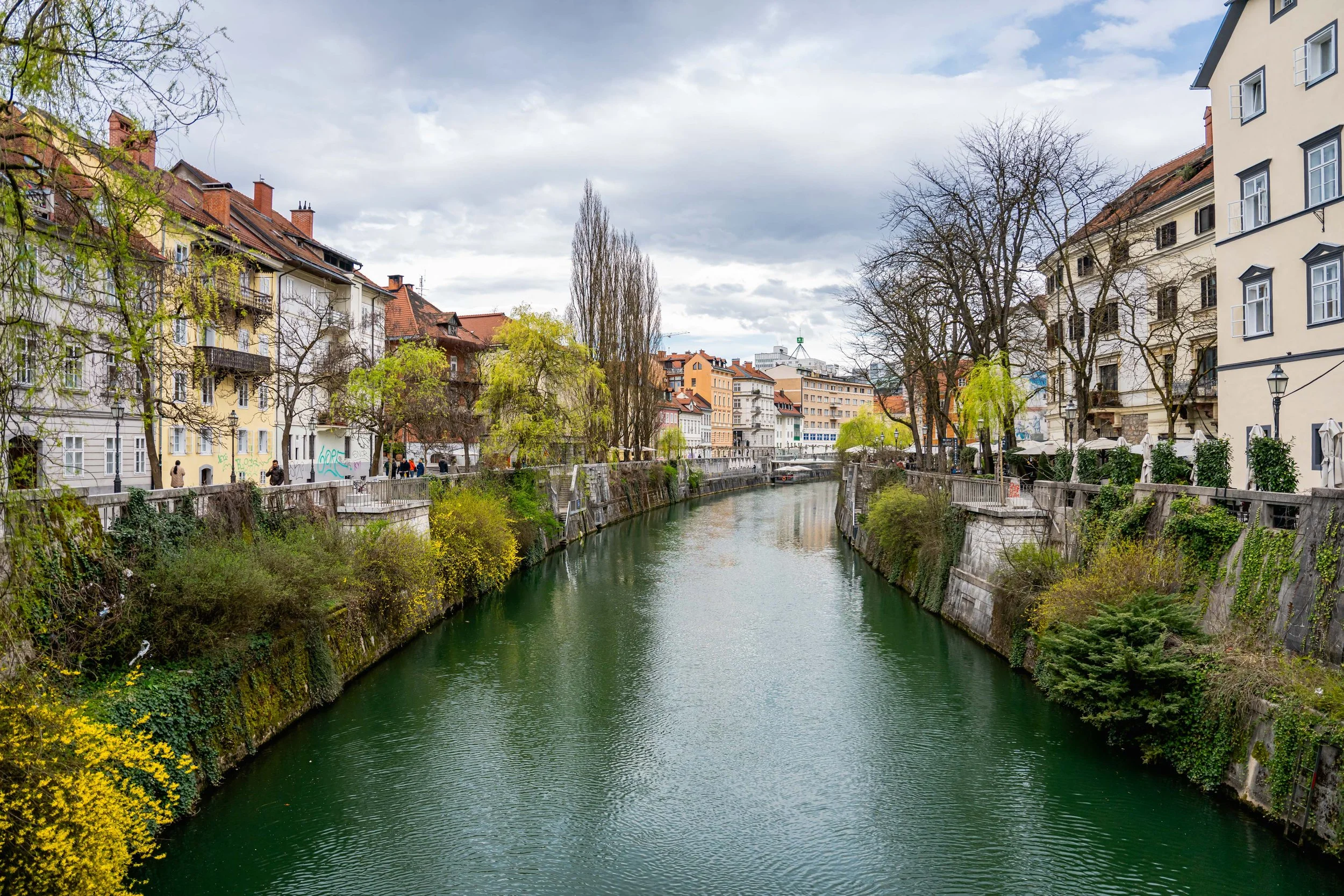
Beautiful Ljubljana ©Matic_Kremžar