
What SPACE UK 2026 revealed about why places succeed (or fail)
Purpose, Performance and the Future of Place.
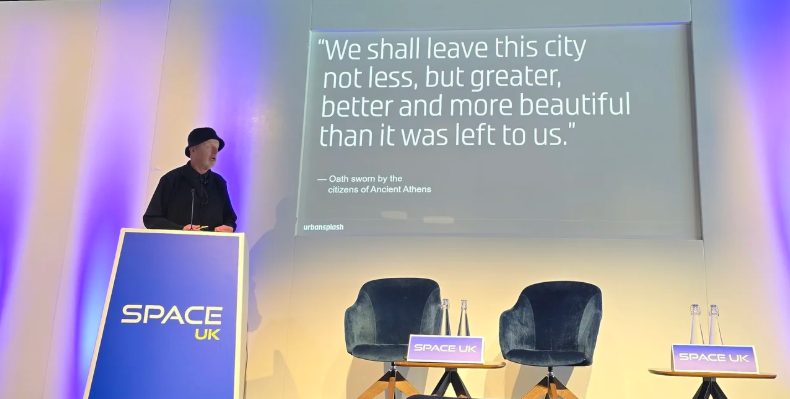
The SPACE UK Conference 2026, hosted at the Kia Oval, brought together developers, investors, asset managers, local authorities and placemakers for a frank conversation about the state — and future — of the UK’s built environment.
What emerged was not a glossy vision of growth, nor a doom-laden market forecast. Instead, SPACE UK surfaced something far more useful: a shared realisation that performance in real estate is no longer just financial — it is cultural, social and emotional.
On the Talking Place podcast, we often say that places don’t fail because of a lack of capital. They fail because they lack meaning. SPACE UK 2026 quietly reinforced that truth.
1. Purpose is no longer optional — it is the strategy
One of the most consistent themes across the main stage and breakout conversations was purpose. Not purpose as a slogan, but purpose as a commercial driver. Developers and investors are increasingly asking: Why does this place exist? Who is it for?
What role does it play in people’s lives?
Places with a clear reason for being — whether cultural, civic, social or economic — are outperforming those built purely around yield optimisation. Purpose gives places narrative clarity, and narrative clarity builds trust with occupiers, communities and investors alike.This echoes our thinking in Why Place Narrative Is the Missing Link in Regeneration and Branding Places Beyond Logos and , where we explore how meaning underpins long-term value.
For a further dive, listen to our podcast EP21- Why real estate is broken and how to fix it with Ben Cross, Where we explored how purpose-led thinking, not short-term returns, is essential to creating places that thrive beyond financial metrics.
2. Development is only the beginning of the value story
A striking insight from SPACE UK was how many organisations are now shifting resource away from development-only thinking and towards long-term stewardship.
In some cases, asset management and place activation teams now outnumber development teams. This is not accidental. The long-term value of an asset is shaped less by how it is delivered, and more by how it is lived in, programmed and managed over time. Events, meanwhile uses, cultural partnerships, and community-led programming are no longer seen as “nice to haves”. They are core to occupancy, retention and reputation.
As discussed on Talking Place EP020 Reimagining Public Practice with John Stiles, the long-term value of places emerges not just from delivery, but from ongoing stewardship, activation and people-centred practice.
3. Vision needs authorship, even in co-created places
Another recurring theme was leadership. The most successful long-term projects — from mixed-use destinations to 20-year regeneration programmes like Olympia, Earls Court, Kings Cross — share one thing in common: a clear, documented vision that survives changes in market cycles, political leadership and personnel.
While co-authorship with communities, creatives and commercial partners is essential, vision cannot be diluted by committee. Someone must hold the narrative thread. Without this, places risk becoming reactive rather than intentional — shaped by short-term pressures instead of long-term ambition.
This echoes on E019- Designing Cities that last: Master planning the Future with Bob Allies (Part 1 & 2) about why enduring places need a clearly authored, long-term vision even when many voices contribute.
4. Culture is now a commercial infrastructure
Perhaps the most energising conversations at SPACE UK centred on culture-led development.
Retail is no longer just transactional. It is sensory, emotional and memory-driven. Housing is no longer just about units delivered — it is about belonging, wellbeing and connection. Workspaces are no longer about desks, but about identity and community. When culture is absent, places feel generic. When culture is present, places become sticky. This reinforces a core belief at Concept Culture: culture is not decoration — it is infrastructure. Without it, places struggle to remain relevant.
On Talking Place E001- How to Create a Successful Place Brand with Dr. Giannina Warren, We’ve unpacked how place branding and cultural identity far from being optional are central infrastructure in making places emotionally and commercially resilient
5. The real risk: homogeneity
One of the quiet warnings that emerged from SPACE UK was the risk of sameness. As financial pressures increase, there is a temptation to standardise — layouts, tenants, materials, even experiences. The result? Places that look efficient on spreadsheets but feel interchangeable on the ground. The danger is not just aesthetic. Homogeneity erodes emotional attachment, weakens community loyalty and ultimately undermines long-term value. Distinctiveness, by contrast, is resilient. It gives people a reason to choose one place over another — and to stay.
A better test of viability
Among all the metrics discussed — IRR, occupancy, pre-lets, rents — one question lingered long after the conference ended:
“Would I actually want to live here?”It is a deceptively simple test, but a powerful one. If a place does not resonate with the people designing, funding and managing it, it is unlikely to resonate with anyone else.
Viability is not just about numbers. It is about lived experience.
What does this mean for the future of place?
Make it stand out
Whatever it is, the way you tell your story online can make all the difference.
SPACE UK 2026 did not offer easy answers — but it did offer clarity.
The future belongs to places that:
Are purpose-led
Are culturally fluent
Are stewarded for the long term
Are brave enough to be different
At Concept Culture, this is the work we do — helping places articulate who they are, why they matter, and how they show up in the world. If you are developing, repositioning or stewarding a place — and need strategic clarity on telling the story of your purpose-led placemaking and culture-led development in the UK — Concept Culture can help.
We work with developers, landowners, local authorities and asset managers to:
Define a clear place, purpose, and vision
Create culturally fluent place stories
Translate strategy into narrative and engaging content
Because places that are purpose-led perform better — commercially, culturally and socially.
Looking to craft a compelling story for your place?
Is your place telling the right story - or any story at all?
Concept Culture is the creative agency helping developers, councils, and urban designers lead with place marketing, place branding, and place storytelling that drives investment and builds pride.
From strategy to content creation, we turn places into destinations.
Let’s talk. - https://www.conceptculture.co/contact