
From Materialism to Meaning: Lessons from London Experience Week 2026
I came to LXW26 with two clear objectives: fill the Talking Place guest pipeline, and immerse myself in the state of the experience industry. Three days, five experience safaris, and more starred notes than I can count later, I left with something I hadn't anticipated - a genuine sense that this industry is not just entertaining people. It's trying to transform them.
London Experience Week is one of those gatherings that is hard to categorise. Hosted by the World Experience Organisation (WXO) in partnership with London & Partners and backed by the Mayor of London, the week-long event took place from 20–24 April 2026 at the Ministry of Sound, London - bringing together 750 senior leaders, operators and creators from over 40 countries. Part conference, part salon, part experience safari - it pulls together storytellers, designers, game makers, financiers, immersive theatre producers and urban thinkers under one broad and urgent question:
What does it take to create an experience that genuinely transforms someone?
I went as someone who thinks about place, story and the built environment. I came back with something I wasn't expecting, a much deeper understanding of why the experience economy and the world of placemaking are converging faster than either side has quite realised.
Here are the five ideas I will be taking forward into my storytelling practice.
1. We are moving from materialism to experientialism. And the built environment hasn't caught up.
Source: LXW
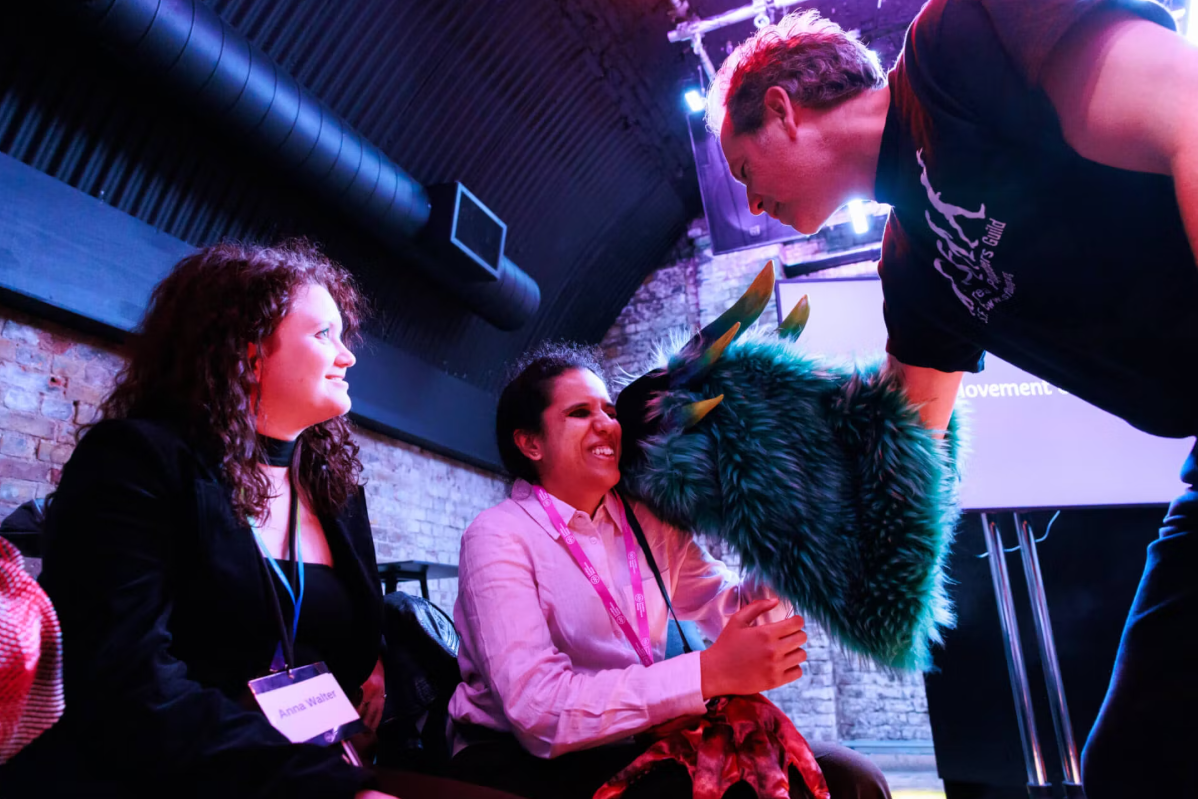
James Wallman of the World Experience Organisation opened the week with a provocation: go back three generations, then visualise life a hundred years from now. What are we building in between?
We are in the middle of a fundamental shift - from a culture defined by what we own to one defined by what we feel, remember, and become. The smartest creative people, he argued, are the ones leading that revolution. "Why not make money and change the world?" It sounds simple. It lands differently when you realise how few people in any industry are actually asking it.
For those of us working in place, the implication is thus: are we designing for the economy we are leaving, or the one we are entering?
2. The most powerful thing a place can offer is transformation -not just experience.
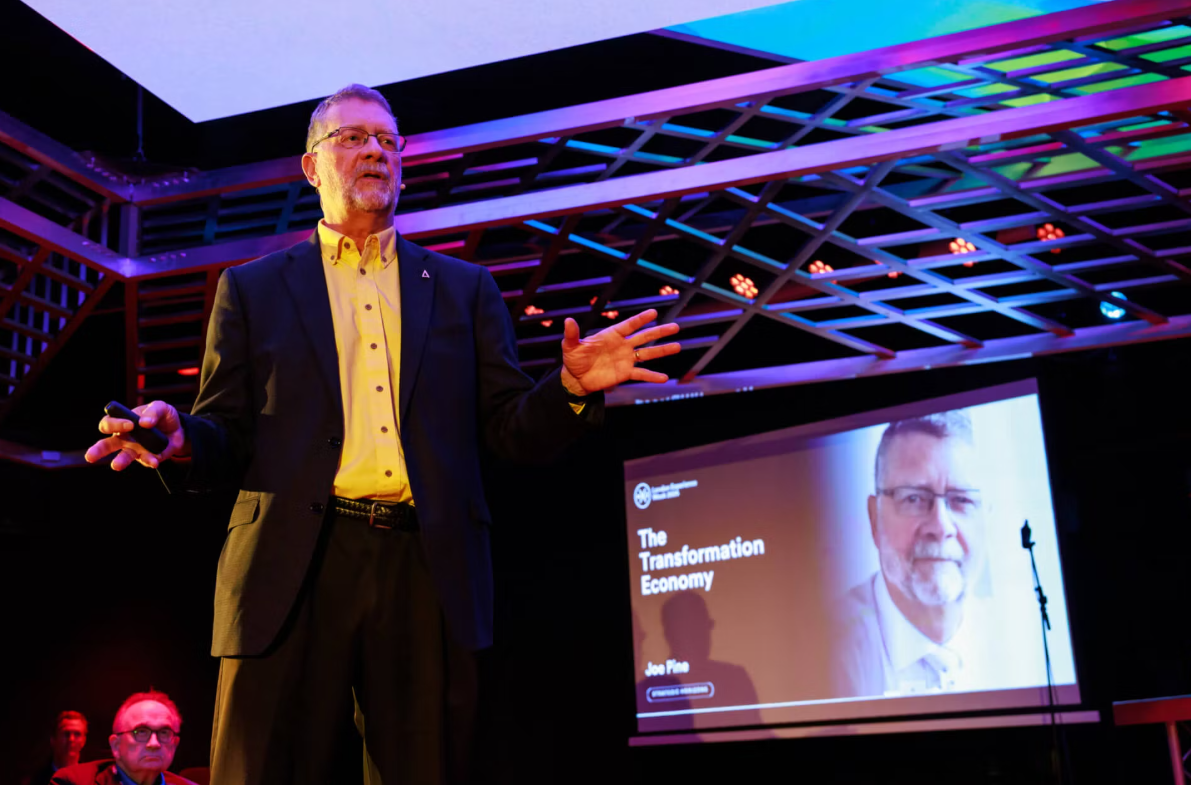
Source: LXW (Joe Pine on stage)
Joe Pine, author of The Experience Economy, made the case for something that goes beyond experience altogether. The Transformation Economy, he argued, is the next frontier - and the distinction matters enormously. Experiences are memorable. Transformations are life-changing. And the most valuable thing any place, brand or business can offer is not a moment but a shift in who someone is when they leave.
His framework for transformation - Prepare, Adventure, Think, Honour - maps onto placemaking in ways that felt immediately recognisable. The best neighbourhoods, public spaces, and destinations do exactly this. They meet people where they are and invite them to become something more.
Joe quoted Stan Hustad, which was the sharpest line of the week for me:
“If a business does not help people flourish, it is a racket.”
Don't be a racket.
3. Story is not just a communications tool. It is the foundation of everything.
Source: LXW
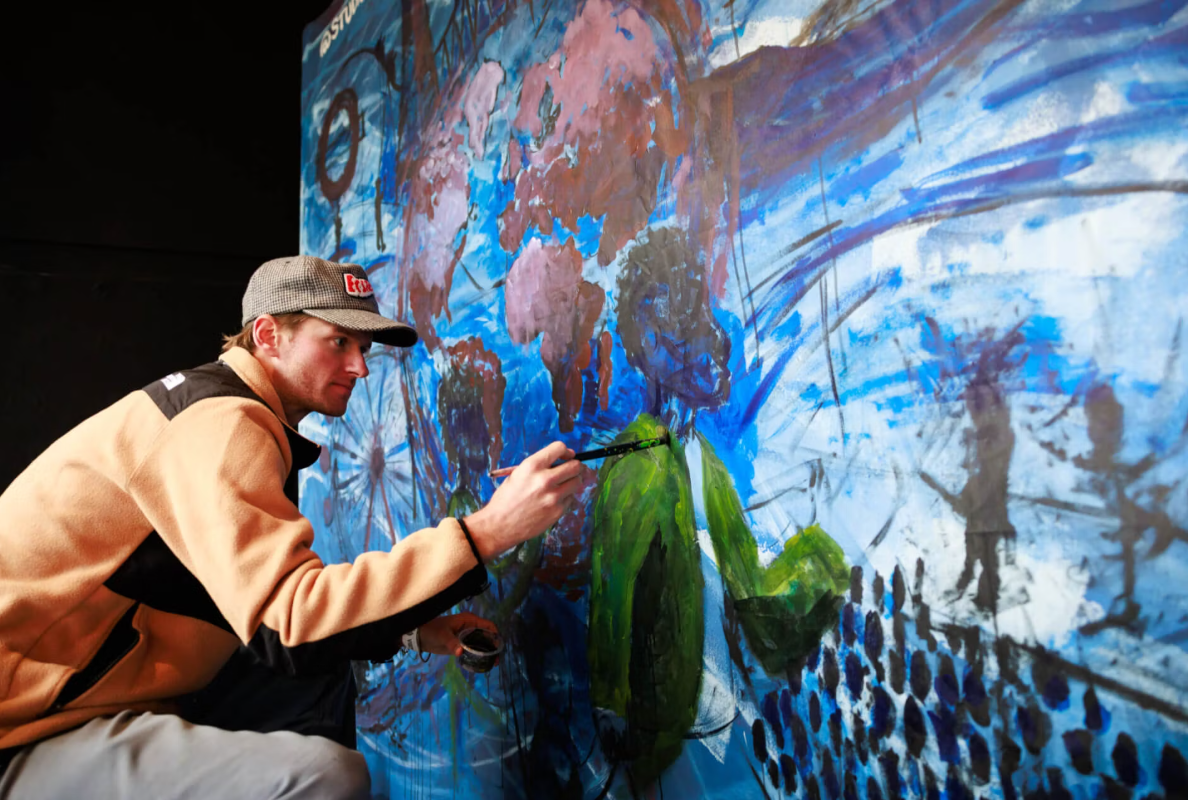
Bob Rogers of BRC Imagination Arts gave what felt like the keynotes of all keynotes of the conference. His argument was total and uncompromising: story is the most powerful force on earth. It is the tool of every major belief system. It is the mechanism through which we organise reality. Whoever controls the story controls the world.
His four keys deserve to be pinned above every creative's desk: it is about them, not you; find, don't invent; speak to the heart, not the head; and understand the difference between timing and timelessness.
When it comes to place storytelling, we keep reaching for data - investment figures, footfall statistics, connectivity indices. But the story that moves someone is never told in numbers. It is told in feeling. The place narrative that creates genuine belonging is the one honest and precise enough to make someone recognise themselves in it.
"Story is the most powerful force on earth. Who controls the story, controls the world. If you want to change the world, you have to change the story."
— Bob Rogers, BRC Imagination Arts
4. Creative ambition and financial reality are not opposites. But they need to be in the room together from day one.
Source: LXW
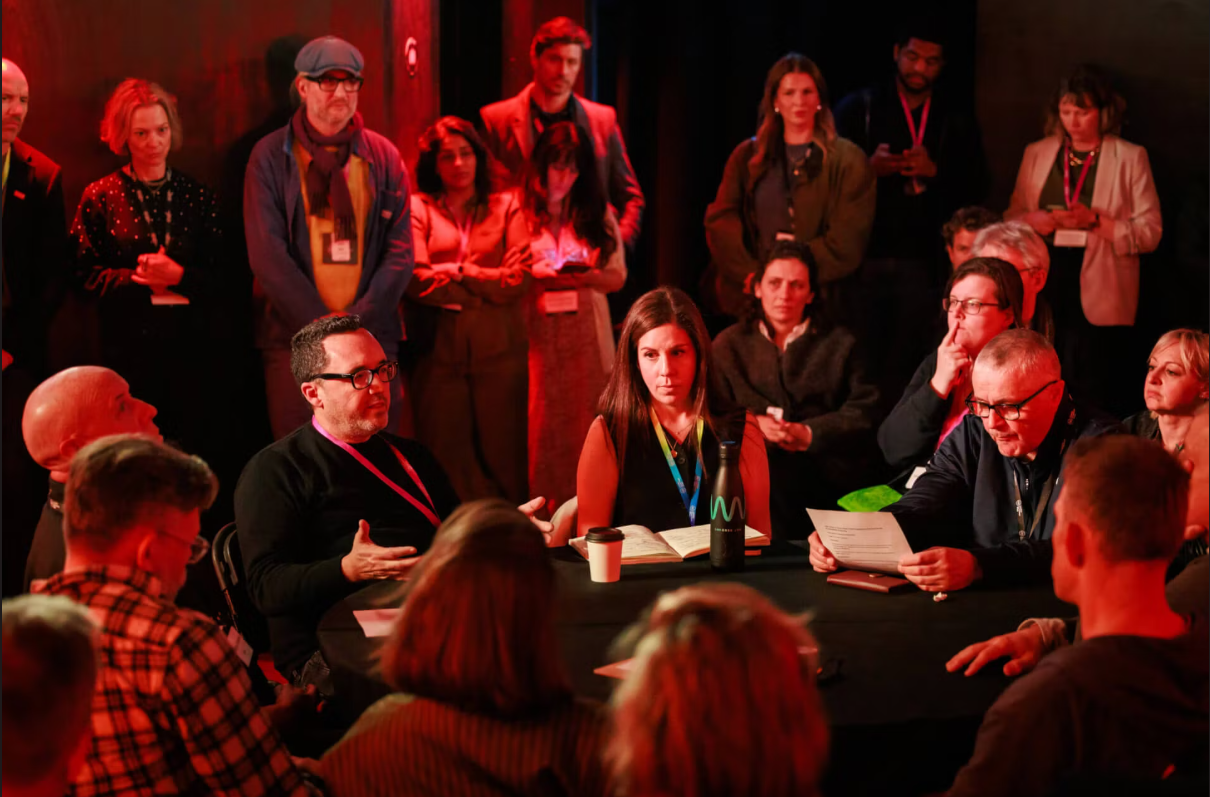
The session that generated the most honest conversation was Tug of War: The Dance Between Creative and Finance. Alicia Yaffe, David Shulman, and Neil Chakravarti were refreshingly direct about the gap between creative vision and the realities of capital- and how to close it without losing either.
Their most important insight was structural: finance, creative, and production need to be at the table at the start of the conversation, not called in once the decisions have already been made. The bigger the cheque, the more suspicious you should be. Have awkward conversations early. Build your village while there is still clear land.
Their advice to anyone at the early stages was simple and delivered without apology: get over being shy about how you are going to make money.
Go back to your storyboard. A one-pager that explains what the experience is and how it will generate revenue is not a compromise of the creative vision. It is what makes the creative vision possible.
5. Embodied storytelling is more memorable than anything we consume through screens.

Source: LXW
Charlie Melcher made perhaps the most quietly radical argument of the week. The body, he argued, is the primary source of emotion. Embodied storytelling - experience that is felt physically, not just watched, is fundamentally more emotional and more lasting than passive consumption. When did we become so still? The age of unlearning, he suggested, is already here.
This landed home after visiting multiple experiences as part of the Experience Safari - David Bowie at Lightroom, Lady Nicotine at Bompas & Parr, Lander 23, War of the Worlds, and The Magician’s Table. Each one proved the point differently. You don't just observe these experiences. You inhabit them. And you leave differently.
What does this mean for placemaking and the built environment?
We keep talking about the experience economy as though it is someone else's industry.
It isn't.
Every public space, every neighbourhood, every building that opens its doors to people is making an experience decision. The question is whether that decision is being made consciously or by default.
The conversations at LXW 2026 made it clear that the most exciting practitioners in the experience economy are asking exactly the questions that placemakers should be asking:
Does the audience walk out the same person who walked in?
Are we helping people flourish?
Who controls the story of this place- and in whose interest is it told?
We don't have a knowledge problem. We have an implementation problem.
We talk endlessly about physical infrastructure - roads, buildings, connectivity. But the emotional infrastructure of a place - the feelings it generates, the stories it holds, the sense of safety or belonging or wonder it creates- is what people actually remember. And it is what they return for.
Placemaking needs to move from design-led to feeling-led. Start with how a place makes people feel, not how we want them to use it.
Place storytelling needs to move from aspiration to truth, not the edited highlight reel, but the real, lived, sometimes messy experience of being somewhere.
Place investment needs to move from transaction to transformation, not just what a place returns financially, but what it gives back to the people inside it.
Thank you to the LXW team for building a week that consistently blurred the line between conference and experience. And to the venues, performers, and producers behind the safaris, you made the theory tangible.
Here's to more emotional infrastructure, embodied stories, and places that help people flourish.
Looking to craft a compelling story for your brand?
If you are looking to create authentic content that resonates with your audience and builds a stronger and closer connection with them, get in touch today. Our creative team of storytellers and experts is ready to help your brand navigate the trends and expectations of our ever-changing world.