For the past two years, one word has dominated both digital discourse and everyday conversation: AI. It has redesigned workflows, rewired industries, unsettled job markets and reshaped creativity at unprecedented speed. 2024 and 2025 became years of acceleration, exposing just how quickly technology can move once constraints are removed. But as we approach 2026, the question has quietly shifted. From CAPTCHA prompts asking us to “prove you are not a robot” to the growing insistence on labels such as not AI-generated, a quiet shift has taken place. So what changed this year? What was the moment of truth? The focus has turned to what we have always been trying to protect online: authenticity. So what can technology do next? More importantly, what does the world actually need from it now?
Nowhere is this shift more visible than in the built environment, where digital has long been treated as an output, a website, a campaign, a set of visuals. That model is no longer sufficient. Digital strategy is becoming infrastructure, shaping how places are understood, debated, trusted and remembered long before construction begins and long after completion. For developers, architects and place-led organisations, the challenge in 2026 is no longer visibility alone, but coherence with time, audiences and intent.
Against this backdrop, the following five digital trends reveal how the industry is evolving to meet what the world now expects from technology.
Adaptive Digital Systems:

Source: Pixelpro
In 2026, digital strategy is shifting away from isolated outputs toward integrated systems. Hence, standalone pieces of work won’t perform in terms of a long-term presence. Websites, social platforms, consultation tools, editorial content, and campaigns are increasingly designed to work together, supporting a project through planning, delivery, and keeping in mind the legacy.
This matters because, as we all have realised, places evolve. Development timelines stretch over years, and digital touchpoints must adapt without losing narrative clarity.
Rather than asking “What do we need to launch?”, leading organisations are now asking:
How does our digital presence support each stage of the project lifecycle?
How do we maintain a coherent narrative across multiple stakeholders?
How does digital reinforce spatial intent rather than dilute it?
The most effective digital strategies now mirror the reality of the built environment and placemaking itself: layered, adaptive, and designed for longevity rather than short-term attention.
2. Trust, Authenticity and Public Legibility:
Source: Blogin
As digital audiences become more discerning, trust has emerged as a new currency. This currency won’t drop and will always be in demand. Over-produced visuals and abstract language no longer guarantee credibility. Communities, planning authorities and partners increasingly want clarity, not just aspiration.
For the built environment, digital platforms are now expected to:
explain decision-making
communicate process
contextualise environmental and social commitments
articulate long-term value, not just end results
Government guidance on digital planning now explicitly calls for transparent, jargon‑free communication, reflecting a growing expectation that organisations make complex processes legible to the public. guidance This shift reflects the realities of planning scrutiny, ESG accountability and public engagement. Digital legibility, the ability to make complex ideas accessible, has become central to building trust. It's about communication, and that only works when the jargon can be simplified to be understood more.
Here is episode 015 from the Talking Place podcast Season 2 on Place literacy with our guest Devorah Block for a deeper dive. In 2026, a successful digital strategy is less about persuasion and more about understanding.
3. Participation-First Digital Engagement:

Source: freepik
The reality today is that life exists in two worlds. One is the living, breathing, and the other is between algorithms. Digital engagement is moving decisively away from broadcast models toward participatory frameworks.
Communities no longer expect to be informed after decisions are made. They expect to be part of the conversation earlier, and digitally enabled engagement is increasingly where that dialogue begins. Delib explains how digital tools are enabling interactive, two‑way engagement rather than broadcast communication.
Participation-first approaches include:
Interactive consultation platforms
Open editorial formats
Responsive social dialogue
Transparent feedback loops
For placemaking, this shift is not simply reputational. Early, meaningful engagement reduces friction, builds legitimacy and contributes to stronger long-term outcomes.
Digital engagement in 2026 is less about amplification and more about relationship-building.
4. Collaboration as Digital Infrastructure

Source:Freepik
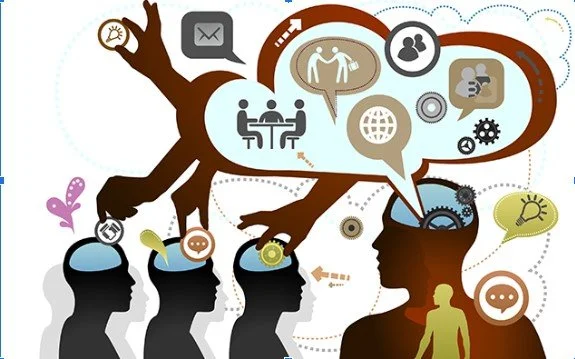
By 2026, collaboration is no longer invisible. It is becoming strategic, structured and increasingly digital.
As projects grow more complex, delivery depends on alignment across boards: Architects, developers, planners, placemaking teams, marketing, PR and stakeholders, often working across locations and disciplines. Fragmentation is no longer viable.
Digital platforms are evolving from coordination tools into shared spaces for decision-making, narrative alignment and accountability.
For the built environment, this shows up through:
Cross-disciplinary digital workspaces connecting design, delivery and communication
Shared narratives that align planning, branding and engagement
Live collaboration across teams and offices, reducing silosIntegrated workflows where strategy, design, and storytelling inform each other
In 2026, digital strategy becomes the connective tissue of a project, enabling collaboration that is coherent, efficient, and resilient across the full lifecycle of a place.
5. The Rise of Digital Calm in a Hyperstimulated World

Source: Unsplash
Fatigue due to hyper-stimulated digital environments is settling in. One of the quietest but prominent digital shifts approaching 2026 is the movement toward digital calm. After years of notification sounds, doom scrolling, algorithmic jail, dopamine rewards, and reduction of our collective attention spans to 30 seconds, there has been a consumer behaviour shift.
Users have been leaning towards no screen time. People are actively seeking environments that will reduce cognitive load and restore focus.
The marketing world is adapting, and brands have been promoting more exclusive events that highlight lived experiences where there are allotted device usage hours, wellness-driven campaigns.
This does not mean less technology. It means more considered technology. We see this through:
Minimalist interfaces
Intentional notifications as opposed to earlier bombardment
Tool-based platforms over attention-based manifestos
Slower interaction pacing.
Digital spaces in 2026 will be increasingly designed not to demand attention but to respect it.
Looking Ahead: A Year of Responsibility
As the line between the physical and digital worlds continues to blur, 2026 signals a shift from acceleration to intention. After years of rapid adoption where AI has often replaced search engines and professionals. The focus is now on responsibility, ethics, and human judgment.
Digital strategy is no longer about keeping up with platforms or trends. It is about alignment: between narrative and place, ambition and responsibility, short-term engagement and long-term value. In the built environment, the most effective digital strategies will not simply promote places, but help them be understood, trusted, and remembered.
Here’s to a new year shaped by clarity, intention and meaningful progress. May 2026 bring innovative ideas, deeper collaboration and the kind of optimism that turns vision into reality.
Looking to craft a compelling story for your brand?
If you are looking to create authentic content that resonates with your audience and builds a stronger and closer connection with them, get in touch today. Our creative team of storytellers and experts is ready to help your brand navigate the trends and expectations of 2026
