
From sustainable products to nature finance, Blue Earth Summit 2026 explored what it takes to turn environmental goals into practical action. For the built environment, that means making sustainable choices commercially viable, measuring their value and telling stories that help people understand why they matter.
Sustainable development needs a wider lens
The built environment knows how to build. It can engineer complex structures, develop new materials and introduce technologies that improve efficiency. Yet translating environmental ambition into widespread, commercially viable practice remains a persistent challenge. Communicating why these changes matter is another.
At Blue Earth Summit 2026 in London, the opening call to “Go Beyond” encouraged attendees to look beyond their own industry to tackle sustainability challenges.
Across conversations with entrepreneurs, investors, conservationists and cultural leaders, a question kept returning: how do we make sustainable choices commercially credible and practically achievable? And how do we make them meaningful to the people they are intended to serve?
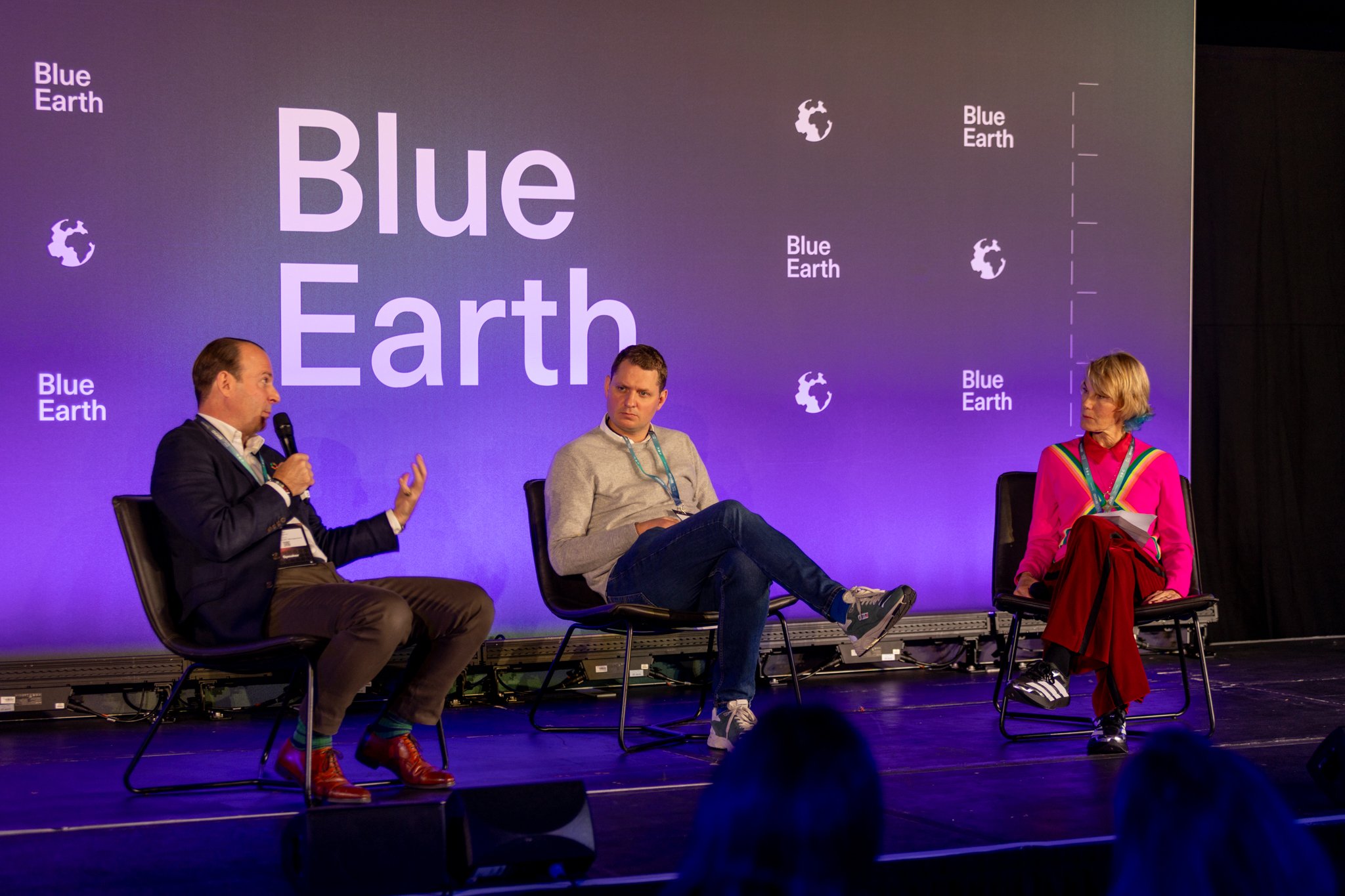
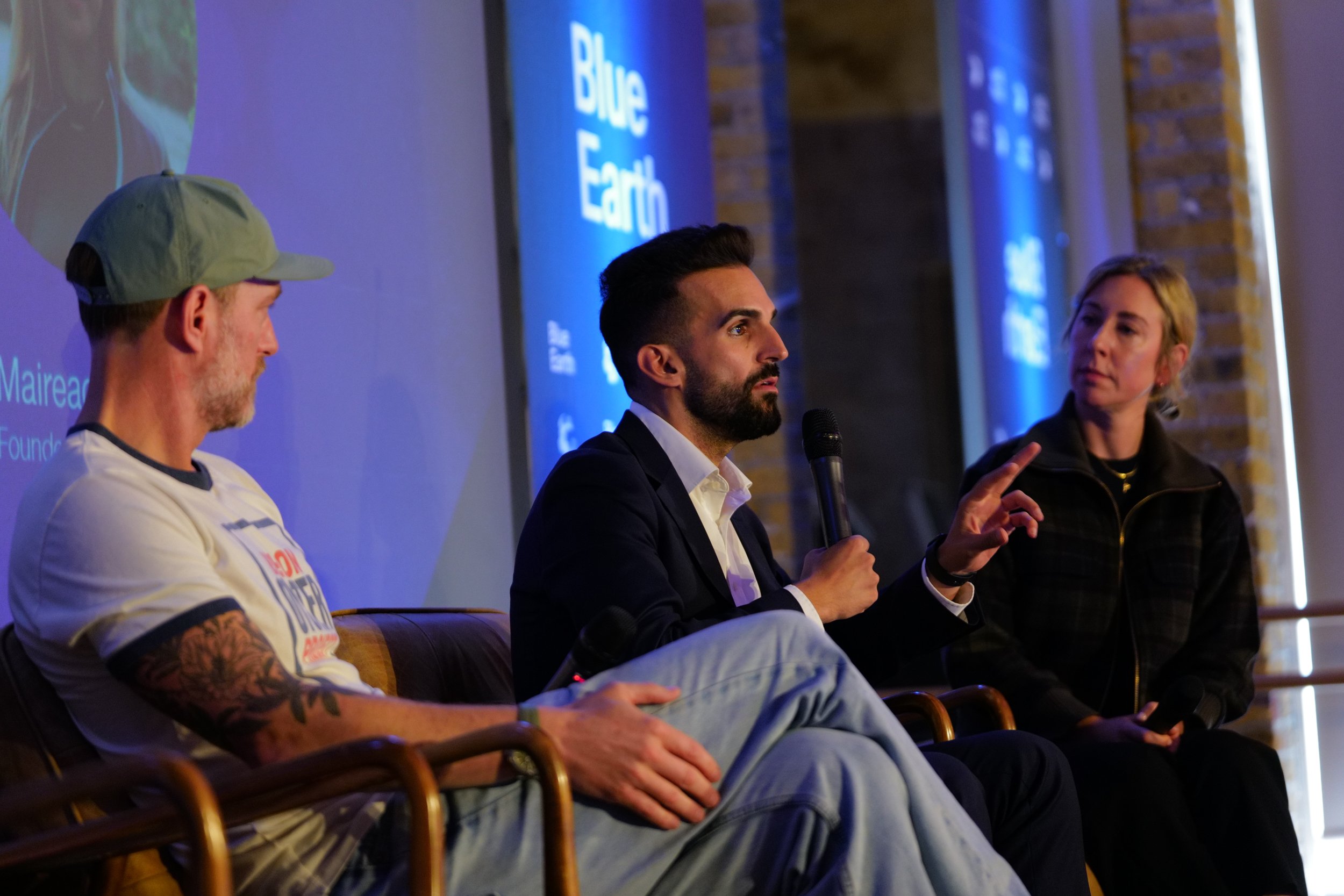
Oliver Gregson, Freddy Ward and Sian Sutherland on the Blue Earth Stage for “Wild Success: What Founders Do Next.” Photo courtesy of Ben Awin.
The conversations drew on ideas from across industries. From consumer products and investment to food systems and community-led conservation, the summit offered perspectives on what it takes to turn sustainability into practice. Wild co-founder Freddy Ward demonstrated why sustainable products must still meet customer expectations.
Economist Kate Raworth used an interactive performance to challenge conventional finance and explore how it could serve life rather than extract from the Earth. Meanwhile, conversations about nature infrastructure and community engagement highlighted the importance of measuring value and building a lasting connection between people and place.
For placemaking, architecture and urban development, sustainable progress depends not just on innovation, but on the business decisions, financial systems and human relationships that bring ideas to life.
Five lessons for the built environment
1. Storytelling turns sustainability into action
How we communicate value influences what gets funded, built and protected.
Construction costs, programme certainty and financial returns are familiar measures in development. Environmental and social outcomes are often harder to quantify, particularly when benefits emerge over decades or extend beyond a single site.
Without credible ways to demonstrate what a project achieves, investors may hesitate. Yet reducing nature's value to one financial metric risks overlooking the complexity of ecological systems and the benefits they provide to communities.
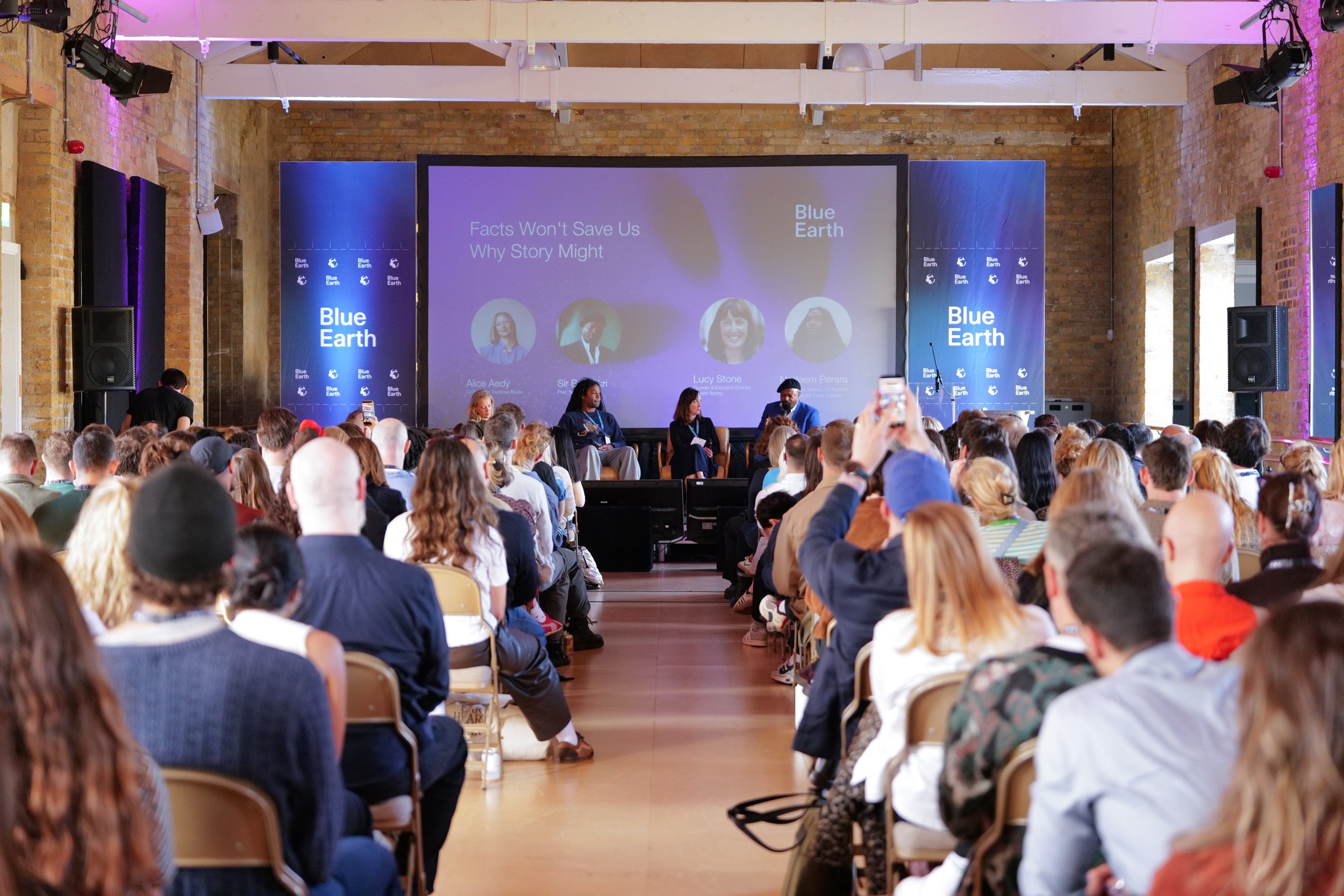
Alice Aedy, Nadeem Perera, Lucy Stone, and Ben Okri explore the power of storytelling to inspire climate action during “Facts Won’t Save Us, Why Story Might” on the Session Stage. Photo courtesy of Harry McCulloch.
Measuring environmental impact is only part of the challenge. The evidence needs to reach the people making decisions and give them a reason to act. Alice Aedy, co-founder of Earthrise Studio, explored this in the session Facts Won't Save Us, Why Story Might, which considered why facts alone do not necessarily change behaviour.
For built-environment professionals, this means communicating environmental challenges through stories that connect with people rather than reinforce feelings of doom. The Climate Spring framework offers three approaches: justice and accountability, which names the harm being done; the journey, which explores the difficult transition already underway; and world-building, which imagines a healthier relationship with nature and each other.
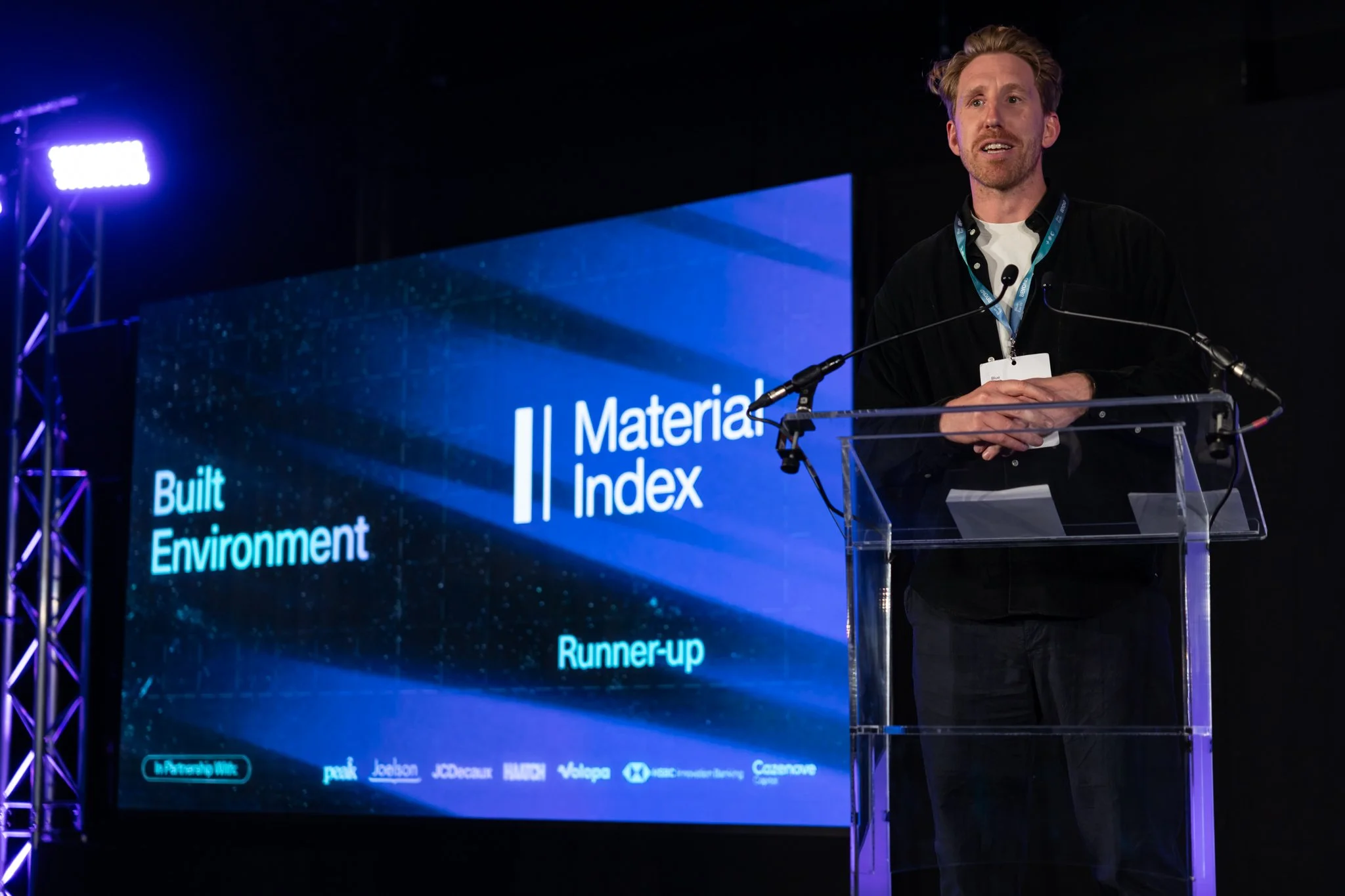
Rob Smith of Material Index accepts the runner-up award in the BE100 Built Environment category at Blue Earth Summit 2026. Photo courtesy of Ben Awin.
Material Index illustrates one way to make previously overlooked value more visible. By creating a marketplace for reclaimed construction materials, it audits, values and lists materials before buildings are stripped out. It helps bring materials that might otherwise be discarded into the conversation earlier, when reuse can still be considered. Making these resources easier to identify and access can help project teams consider circular construction as part of their material strategy.
Good measurement helps teams compare options, understand trade-offs and make more informed decisions. Storytelling gives that evidence meaning, showing why environmental and social value matters in shaping projects.
2. Build sustainability into business performance
Freddy Ward, co-founder and CEO of Wild, offered a practical lesson in bringing sustainable products into the mainstream. The company's first natural, refillable deodorant did not perform as intended. It took repeated iterations to develop a product that met customer expectations.
As Ward put it: “Sustainability is the underpinning, but it only works at scale if the product comes first.”
The principle applies directly to sustainable construction. Low-carbon materials, resource-efficient design and circular construction methods must do more than demonstrate environmental benefits. They need to meet the practical requirements of real projects, including cost, reliability, performance and ease of adoption.
The summit's BE100 Built Environment pitches brought this into focus. Material Index is working to scale the reuse of construction materials connecting the industry with materials already available in existing buildings and infrastructure. Beton showcased technology intended to reduce the carbon emissions and cost associated with concrete.
Both businesses connect environmental objectives to problems the construction industry already needs to solve. That is a stronger proposition than asking project teams to prioritise sustainability at the expense of cost or performance.
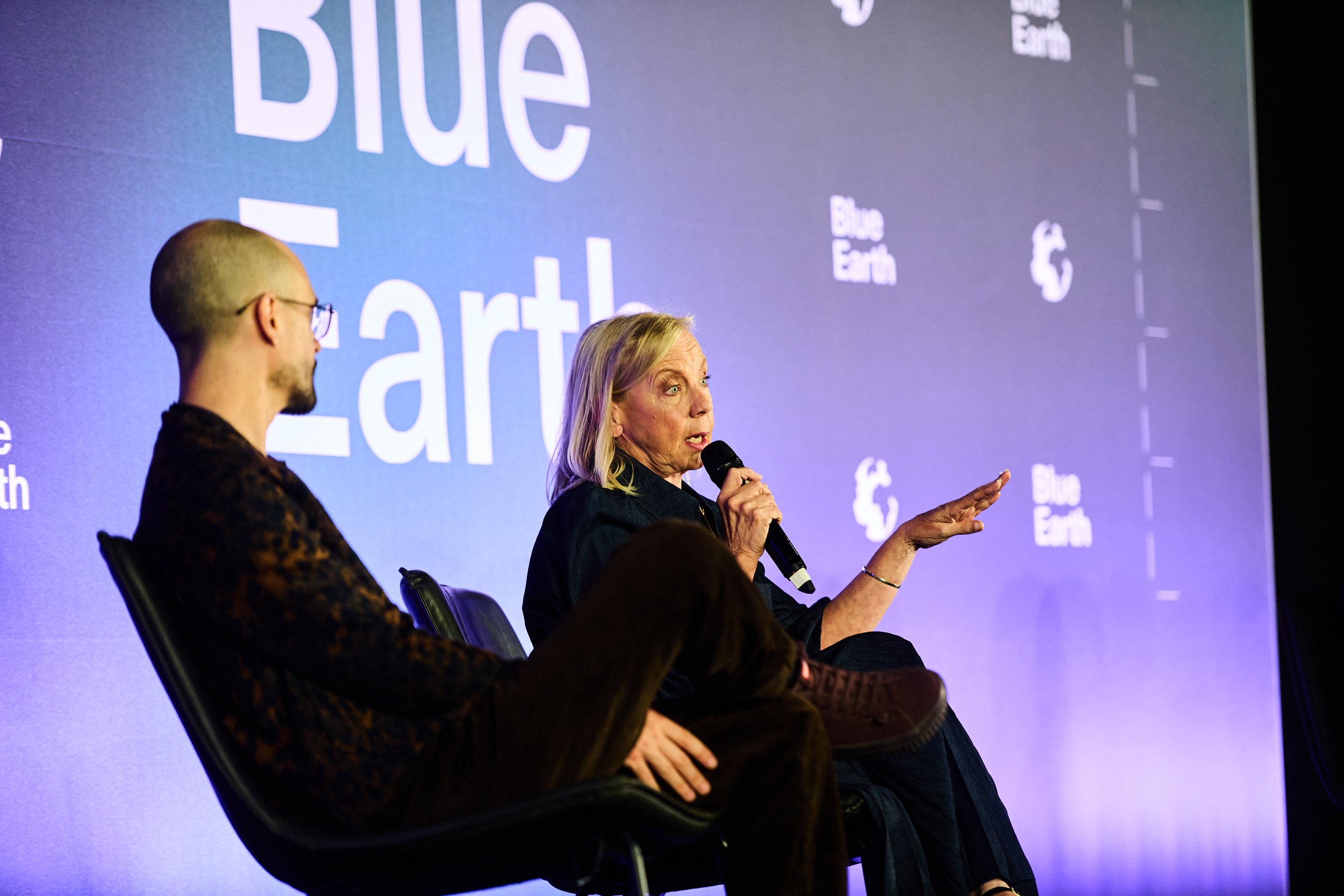
Deborah Meaden during “The Purpose Premium: Does “Sustainable” Actually Pay?” on the Blue Earth Stage. Photo courtesy of Stew MacKellar.
Deborah Meaden, the well-known entrepreneur and Dragons’ Den investor, chellenged founders to define what sustainability means for them, linking it to supply-chain resilience, business risk and future profitability. She also stressed the importance of telling authentic stories about progress rather than staying silent for fear of greenwashing accusations.
For developers and investors, this means integrating environmental performance into the core business case. Clear, credible storytelling can help communicate the value of sustainable choices alongside the financial and operational benefits of a project.
3. Climate risk and nature need to shape investment decisions
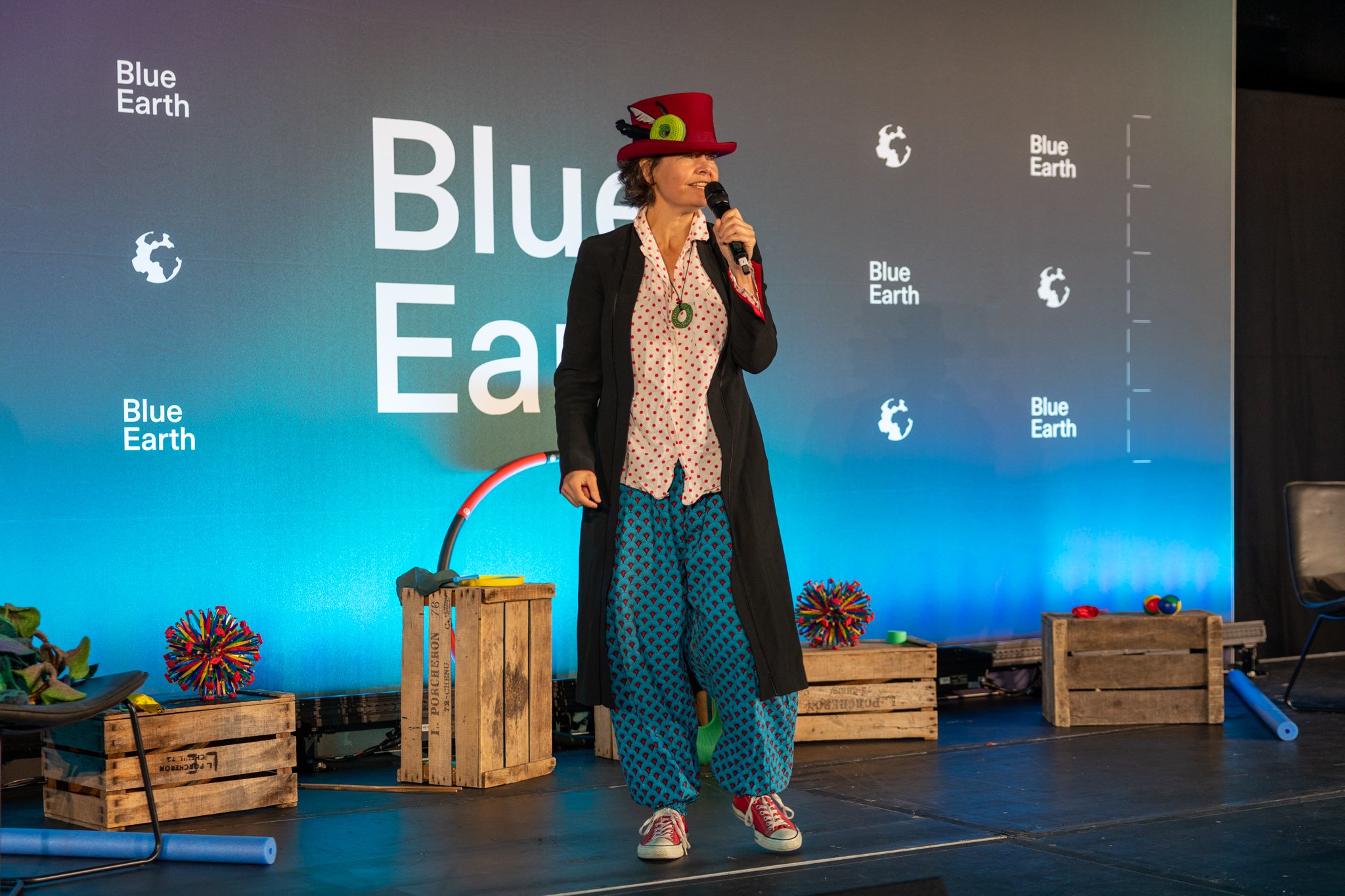
Kate Raworth performs at the Blue Earth Summit 2026 opening circus. Photo courtesy of Ben Awin.
Economist Kate Raworth, founder of Doughnut Economics, challenged the assumptions underpinning conventional finance. Through her framework, she explored the tension between an economy built on extraction and accumulation and one that serves life rather than extracts from the Earth. This means aligning financial systems with the cyclical, relational and regenerative principles of nature.
For developers, this raises a practical question: how should investment decisions change when nature is treated as essential infrastructure? Its role in drainage, water quality and climate resilience needs to be considered during planning and design, rather than left until the landscaping stage.
The financial implications of climate change are becoming harder to ignore. Oliver Gregson, CEO of Schroders Wealth Management, highlighted how climate risks are reshaping investment decisions, arguing that necessity can create opportunities for innovation.
Buildings and infrastructure are long-term assets, so environmental conditions and resilience should be considered alongside more familiar financial and operational risks. These factors can influence the durability and performance of a development over time.
Recognising nature's value, however, is not the same as knowing how to finance its recovery. Restoration projects may generate several potential revenue streams, including Biodiversity net gain (BNG), carbon credits, water-quality improvements and natural flood management. Yet uncertain ecological outcomes and inconsistent measurement can make these projects difficult to assess and fund.
The discussions pointed towards how uncertainty around measuring biodiversity gains has stalled voluntary nature finance. The 30x30 RESTORE Unit Innovation proposes funding clearly defined restoration activities over a set area and timeframe, giving businesses a verifiable way to support nature while building brand value.
Mete Coban and Pete Malinowski discuss what it takes to restore a harbour during “Notes From Two Harbours” on the Session Stage. Photo courtesy of Harry McCulloch.
London's approach to waterways offers a local example of how these issues connect. Deputy Mayor of London Mete Coban's discussion of the London Clean Rivers and Waterways Plan brought attention to water quality, sustainable drainage and opportunities to reconnect communities with urban waterways.
The results of wider restoration and infrastructure projects show what this work can achieve: beavers reintroduced to Greenford after 400 years have been credited with stopping flooding at the station, while the Tideway Tunnel has diverted around 95% of sewage that would otherwise have entered the Thames. Fish diversity in the river has also recovered, with more than 125 species recorded compared with numbers described in the notes as near zero.
Such work illustrates how environmental infrastructure can contribute to the resilience and experience of a city, provided it is supported by appropriate investment and long-term management.
4. Better places depend on people as much as technology
Technology can improve the performance of buildings and infrastructure, but it cannot guarantee that people will use, understand or benefit from them.
Nadeem Perera, co-founder of Flock Together, brought this human dimension to the summit's conversations about nature. The birdwatching community creates opportunities for Black and Brown people to engage with the outdoors, challenging assumptions about who feels welcome in environmental spaces.
Its work highlights a distinction that matters for sustainable placemaking: providing access is not the same as creating belonging. A public space may be physically accessible, but that does not automatically mean everyone feels welcome or sees it as somewhere they can participate.
Building that sense of belonging also means involving people with lived experience of a culture in shaping decisions and placing them in leadership roles, rather than assuming we can understand a community from the outside.
Pete Malinowski, President and CEO of the Billion Oyster Project, offered another perspective. The organisation combines oyster-reef restoration in New York Harbor with hands-on education, involving students in the work of rebuilding marine ecosystems. Its approach connects ecological recovery with practical learning and a stronger relationship with the local environment.
Both examples show why community involvement matters to lasting environmental change. People need opportunities to participate, develop relationships with their surroundings and understand how their actions contribute to a wider effort. Stories that reflect local experiences can help people see themselves as part of that effort.
For architects, developers and placemaking practitioners, this calls for questions that go beyond what a space looks like or what facilities it provides:
Who will use it?
Whose perspectives are missing?
Whose voices shape decisions?
How can local knowledge inform its design?
How can people participate in a place’s ongoing care, rather than simply use it?
Involving communities early helps create places that reflect their needs and experiences. Sharing their stories can also help others understand what makes those places meaningful.
5. Sustainable development requires a systems-thinking approach
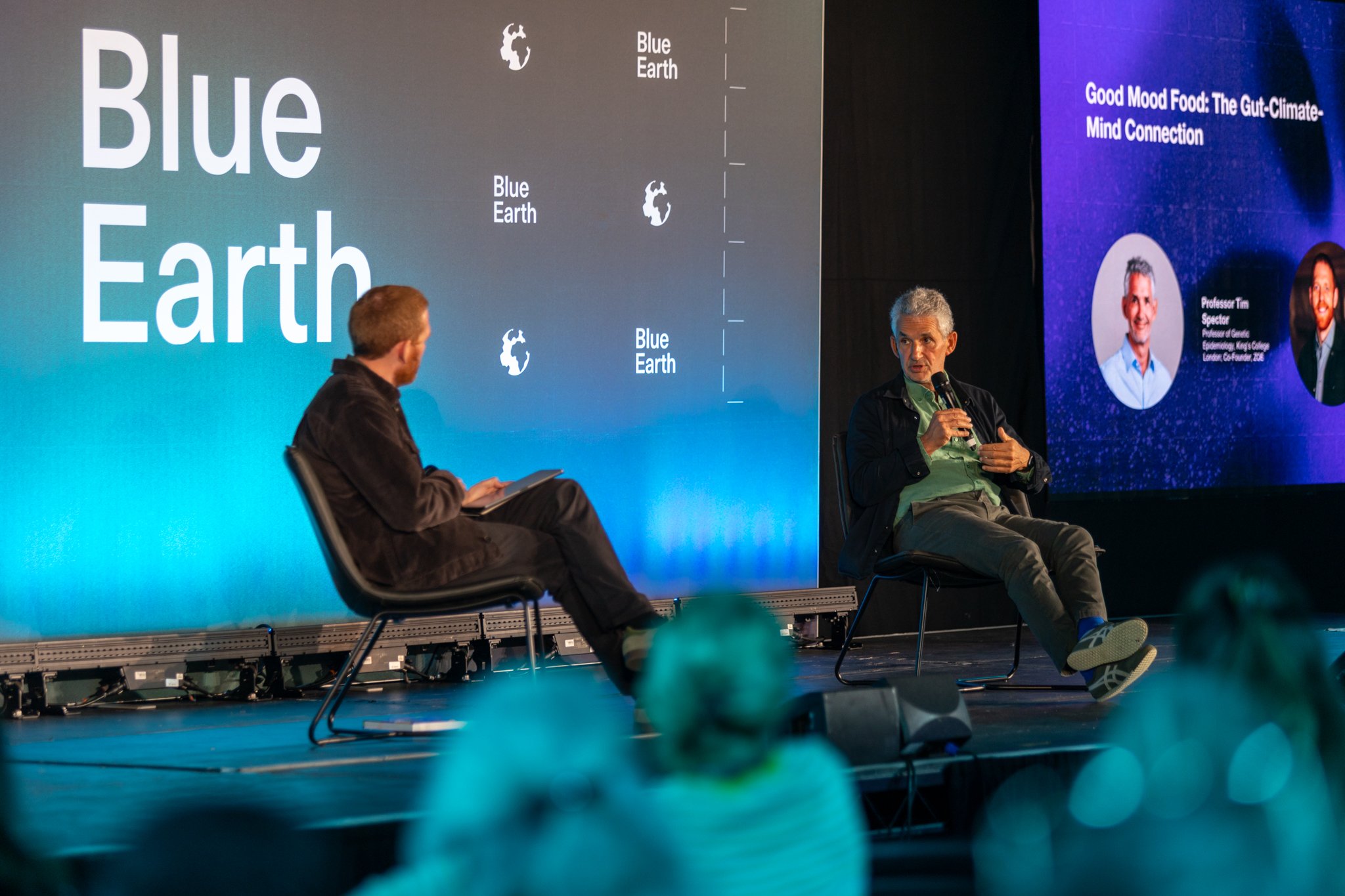
Tim Spector and Paul Behrens discuss the links between food, gut health and climate during “Good Mood Food” on the Blue Earth Stage. Photo courtesy of Ben Awin.
The connections between environmental outcomes and everyday life were also evident in Good Mood Food: The Gut-Climate-Mind Connection, featuring Tim Spector, professor of genetic epidemiology at King's College London and co-founder of ZOE, alongside Paul Behrens of the Oxford Martin School at the University of Oxford.
Their discussion explored how food systems connect soil, climate, human health and wellbeing. The wider point is that decisions in one part of a system can have consequences elsewhere, often in ways that conventional measures overlook.
The same thinking applies to cities and development. A building’s impact on people and nature depends on its design, materials and relationship with the surrounding environment.
A project may improve energy performance while overlooking biodiversity. A public space may be accessible on paper but fail to create a sense of belonging. A restoration scheme may achieve short-term gains without the funding or community involvement needed to sustain them.
Considering these effects together helps teams spot trade-offs early and assess a project’s wider social, ecological and economic impact. This creates a fuller picture of how a project contributes beyond the performance of an individual building or intervention.
The built environment can also learn from how other sectors approach these challenges. Consumer businesses understand product adoption; finance examines risk and value; conservation relies on long-term stewardship; and community organisations build participation.
These perspectives are most useful when considered early, while teams can still influence the brief, investment decisions, and how a project responds to its surroundings and communities.
Recognising innovation across business and impact
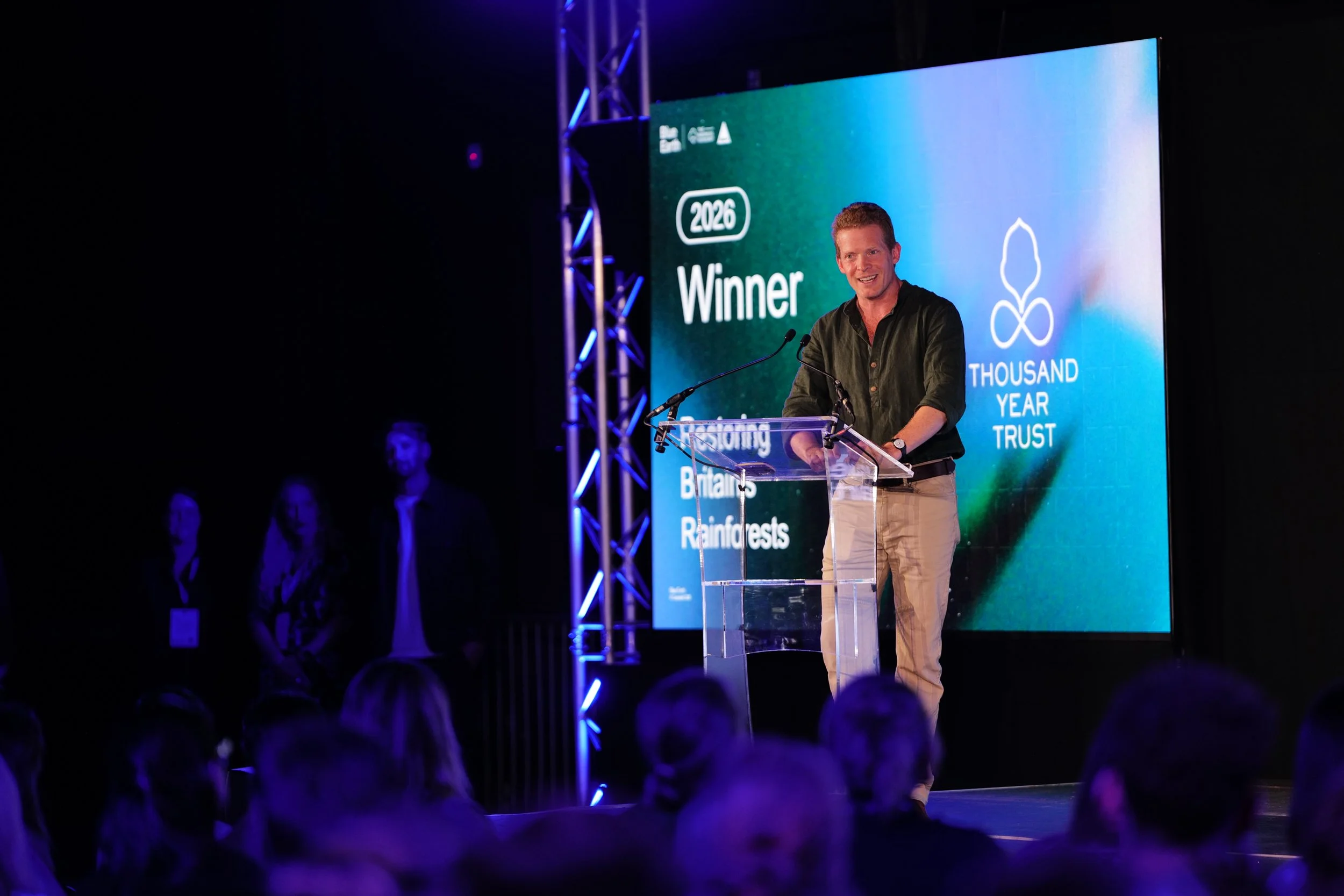
Merlin Hanbury-Tenison of Thousand Year Trust on stage at Blue Earth Summit 2026, following the charity’s win at the inaugural BE:IMPACT Prize for Restoring Britain’s Rainforests. Photo courtesy of Harry McCulloch.
The inaugural BE Prize went to Thousand Year Trust for Restoring Britain’s Rainforests, a campaign to raise awareness and support for Britain’s threatened temperate rainforestsOnce covering up to 20% of the British Isles, temperate rainforest now occupies less than 1% of its historic range. Thousand Year Trust aims to help triple the area of rainforest growing across Britain.
The win shows how storytelling can bring environmental issues to wider attention and inspire action. The charity received £10,000 in unrestricted funding, alongside creative, production and media support. It will also work with Big Give to explore a match-funding campaign for 2027.
The BE100 awards also recognised businesses developing solutions to sustainability challenges. Converge won the Built Environment category for its concrete data platform, which combines real-time strength data with AI-powered curing predictions. By helping construction teams understand when concrete is ready for the next stage of work, the technology aims to improve project planning and reduce delays.
The other BE100 winners were OkHi (AI & Technology), Lir Labs (Blue Economy), Capture6 (Carbon & Nature), Odqa (Energy), VNYX (Fashion & Materials), Elicit Plant (Food & Agriculture), Genomate Health (Health & Wellness), Novi Innovations (Media & Education) and Ontra Mobility (Transport & Mobility).
Selected from 1,414 applicants, the ten winning businesses each secured at least £100,000 in investment through BE100 Fund II, supporting innovations across the built environment, climate, health and other sectors.
Putting sustainability into practice
Blue Earth Summit 2026 reinforced the power of storytelling to bring people along the climate action journey. Storytelling is what connects ambition to action.
For the built environment, this means showing how projects benefit communities, respond to nature and contribute to a more resilient future.
At Concept Culture, we turn complex ideas and ambitions into stories that connect with audiences. Through thought leadership, podcasts, content strategy and social media, we help organisations communicate their purpose, demonstrate their impact and build support for change.
Follow Talking Place for more conversations and insights on the people, projects and perspectives rethinking how we design, develop and experience places.